Skull Cap Beanie: The Unsung Crown of the Block

Behold the skull cap beanie: not the oversized hipster version that looks like a sad sock hanging off the back of your head. I mean the real one. The skull cap beanie. The tight, no-nonsense, fits-in-your-pocket crown that every Black dude has either owned, borrowed, or lost to an ex at some point.

This little knit wonder ain’t just a hat. It’s a lifestyle, a survival kit, and sometimes even a personality. You don’t “just” wear a skull cap. You step into it like you’re clocking in for the day. The skull cap beanie got its start as workwear. Sailors, dock workers, welders—cats who needed their heads warm without some floppy brim getting in the way. It was utility before it was style. And Black folks, as always, saw the potential and flipped it. What started as a “keep ya scalp from freezing” cap became a “yeah, this is part of the fit” moment.

We didn’t just put it on to keep warm. We put it on to look warm—as in, warm-blooded cool. It’s that blend of practicality and swagger that’s kinda our specialty.

The Every Day Flex of the Skull Cap Beanie

Part of what makes the skull cap legendary is its adaptability. You can stash it in a coat pocket or the glove compartment. You can fold it into a ball and shove it in your back pocket until the temperature drops. And when you put it on? Bam—instant transformation.

Late to class? Throw on a beanie, nobody knows you skipped brushing. Running to the corner store? Beanie. Studio session at 2 a.m.? Beanie. That chilly wait at the bus stop? Beanie. Hungover Sunday brunch? Beanie. It’s the Swiss Army knife of headwear.

And unlike some accessories, it doesn’t scream. It whispers. It says, “Yeah, I didn’t even try this morning… but I still look better than you.”

The Street Aesthetic

Now, skull cap beanies aren’t just about function. They’ve carved out their own little lane in streetwear. There’s something about a ribbed knit cap pulled low that makes a fit feel intentional. Hoodie, bomber jacket, Timbs? Add a beanie and suddenly you’re poster material.

It’s the minimalist crown. No flashy logo needed. No velour shine. Just fabric and attitude. You don’t wear the beanie to show off the beanie—you wear it so your vibe shines harder.

And let’s keep it real: the beanie plays well with Black hair culture. You got braids? Beanie. Locs? Beanie. Low cut with waves? Careful, but yes, beanie—especially if you’re doubling up over a wave cap. Bald-headed brothers? Beanie saves you from that disrespectful winter wind. It’s versatile like that.

Well-Known Beanie Facts

  1. They disappear. Like socks. You know you had three of them last winter, but now there’s only one. Where’d they go? Probably chilling with your missing Tupperware lids.
  2. They stretch out. Nothing sadder than a beanie that used to hug your dome but now sags like a deflated balloon.
  3. They end relationships. Ask anybody—your ex is probably still walking around with your favorite skull cap, acting like it was hers all along.

ideris elba in a skull cap beanie

But that’s part of the legend. Losing a beanie is like losing a mixtape—you’re mad for a minute, but the memories are forever.

And yes, celebs. If you want a fast-read on how mainstream style drinks from Black streetwear wells, look at the folks who wear beanies and keep it unforced. Idris Elba—an OG of effortless, grown-man cool—has been photographed repeatedly in snug knit caps that read equal parts warmth and understated swagger. When he does the beanie, it’s not about hiding hair; it’s about finishing an outfit with a calm, curated edge.

Why We Love The Skull Cap Beanie

The beanie works because it’s honest. It doesn’t try to be too much. It’s not chasing trends or dripping logos. It’s the friend that always shows up when you call. Cold outside? Beanie. Bad hair day? Beanie. Just trying to keep it lowkey and move through the world unnoticed? Beanie.

And even though it’s humble, it’s also powerful. The right beanie can pull a fit together in a way that feels effortless. It can say, “I’m chill,” or “Don’t mess with me,” or even “Yeah, I’m creative as hell.”

It’s Black ingenuity 101: take something simple, make it essential, and turn it into a cultural staple.

Skull Cap Beanie Styling

Style tips for your rotation: keep at least one snug, ribbed black beanie for stealth mode (that clean silhouette is a neutral that plays well with coats and hoodies). Add a chunky knit or a color-pop for when you want the look to read loud without saying a word. For winter, cop a fleece-lined skull cap for the warmth without the bulk. And if you’re layering with durags or wave caps (yes, many of us do), a thin beanie can be the outside finishing touch that levels up compression with polish—practical grooming married to street-ready aesthetics.

Let’s not pretend the beanie has no quirks. They stretch out, disappear in laundry, and somehow one of the pair always vanishes like it’s been abducted by the sock black hole. But those are small prices for a hat that moves with you, protects your head, and looks right when you walk into a room and don’t feel like performing. The beanie trusts your vibe; it doesn’t demand it.

So yeah: the skull cap beanie is low-key regal. It’s an heirloom of laborwear, an improv tool for quick style, and a quiet signal of cultivated taste. Wear it like you mean it—snug, intentional, and with the knowledge that beneath that simple knit is a long history of working heads turned into street crowns.

Skull Cap Beanie vs the Muslim Taqiyah

A skull cap beanie and a Muslim taqiyah might look cousins from across the street, but they ain’t the same hat at all. The skull cap beanie is pure streetwear utility—knit, stretchy, ribbed, and meant to keep your dome warm while making the fit look clean. It’s fashion, it’s function, and sometimes it’s just a lazy-day lifesaver.

The taqiyah, though, carries deep religious and cultural meaning. Worn by Muslim men, especially during prayer, it’s a symbol of devotion and modesty. It’s often cotton, crocheted, or embroidered—something crafted to last, not stretched out by accident in the wash. You rock a beanie ‘cause it matches your hoodie; you rock a taqiyah to honor faith.

So yeah—they both hug the head, but one whispers style, the other speaks to God. Two different languages, same vocabulary: respect the crown, whatever form it takes.

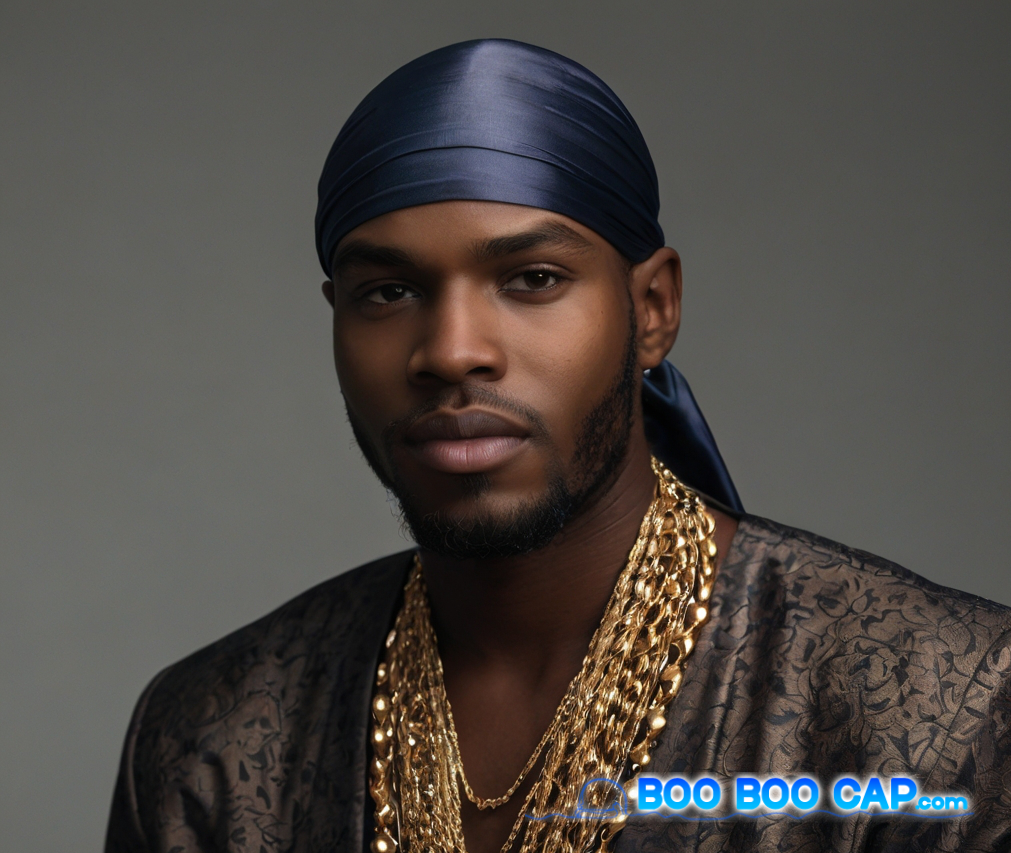
Durag vs Wave Cap: The Eternal Barbershop Debate

Durag vs. wave cap. It’s the argument that never dies. It’s like Jordan vs. LeBron, flats vs. drums, or whether pineapple belongs on pizza (it don’t, by the way). Step into any Black barbershop on a Saturday morning and you’re gonna hear a debate louder than the Clippers game on TV.

The barbershop is sacred ground, but it’s also comedy central. And when the durag vs. wave cap topic pops off? Whew. Everybody got jokes.

durag vs wave cap

Scene:

Barber’s chair squeaks, Clippers buzzing, and two dudes—let’s call them Marcus (Team Durag) and Reggie (Team Wave Cap)—are waiting on their cuts.

Marcus (Team Durag): “Bruh, let me just say this loud so everybody in here can hear: the durag is king. Period. It’s a crown. A symbol. You can walk into the cookout with a fresh velvet durag and pull more attention than the DJ. Ain’t nobody pulling up in no wave cap!”

Reggie (Team Wave Cap): laughing “Boy, please. The durag is Instagram. The wave cap is LinkedIn. My wave cap out here doing the WORK while your little silk cape just flaps in the breeze looking cute. Who cares about style when your waves look like potholes?”

Marcus: “Potholes?! Bro, don’t disrespect me like that. My durag got compression. My durag got versatility. Tie it flat, tie it up, hang the flap, tuck the flap—I got options! Your wave cap only come in two settings: on or off. It’s giving 1990s stocking robbery vibes.”

Reggie: “But my waves stay laid, though! Your durag sliding off in the middle of the night like it’s quitting its job. Meanwhile, my wave cap hugging my head so tight it leave me with an extra eyebrow. That’s dedication. That’s loyalty. That’s love.”

Marcus: “Love? Man, your wave cap look like it came out the bottom of a dollar store grab bin. Ain’t nobody wearing that outside! The durag can go to the mall, to the gas station, to the corner store. A velvet durag? That’s date-night attire. My durag step in the club and people salute. Your wave cap show up, and security gonna think you forgot your mask.”

Reggie: grinning “You right—you can wear a durag outside. But that’s ‘cause you have to. You know why? ‘Cause if you don’t double up with a wave cap underneath, your waves look like somebody dropped a rock in the pond—just ripple in one direction. Be real: every serious waver in this shop knows the truth. The strongest wave routines? Wave cap under, durag on top. Teamwork make the dream work.”

Marcus: “Oh, so you admitting wave caps need a chaperone now? See, the durag stand alone like a legend. Your wave cap need a buddy system just to function. That’s sad, bro.”

Reggie: “Nah, see, you got it twisted. The wave cap is the general. It’s the backbone. The durag is the Instagram filter. Nice, flashy, adds some sparkle. But without the wave cap doing the compression underneath, your durag ain’t nothing but a fashion scarf.”

Marcus: “Scarf?! Bruh, you sound like a hater. Look, I’ll put it like this: the durag is LeBron—style, talent, leadership, iconic. The wave cap? That’s Udonis Haslem. Yeah, solid, dependable, but ain’t nobody buying tickets to see you.”

Reggie: clapping his hands “AND YET—without Haslem, the team falls apart! Without the wave cap, your durag is slipping, your waves crooked, your whole game exposed. The wave cap is the unsung hero. It’s the man behind the curtain. And you better respect it.”

The Peanut Gallery

By now, the whole barbershop is listening in, laughing, throwing in commentary.

Old head in the back: “Man, I been wearing wave caps since before y’all was born. You don’t need no durag if you brush right. Durag just for showing off.”

Teenager in the corner: “Nah, velvets are hard. I got three in rotation right now. Got one to match my Jordans.”

Barber: chuckling as he lines somebody up “Look, end of the day, waves don’t care what you got on top. If you ain’t brushing, if you ain’t moisturizing, if you ain’t putting in that work—neither the durag nor the wave cap gon’ save you. Y’all arguing over tools when the real magic is the discipline.”

Marcus: pointing at Reggie “See? Even the barber said it. And discipline is regal, my brother. That’s why the durag is king.”

Reggie: leaning back in his chair, smirking “And every king needs an army, my guy. Wave caps forever.”

Durag vs Wav Cap: The Verdict’s In

So who wins the durag vs wave cap brawl? The truth is, it depends who you ask. The durag got the swag, the style, the cultural weight. The wave cap got the compression, the loyalty, the no-nonsense results. Most real ones? They don’t even choose. They wear both. Durag on top, wave cap underneath. Harmony. Balance. Yin and yang.

But don’t expect the debate to end anytime soon. Because as long as there are waves, there will be barbershop arguments. And honestly? That’s half the fun. The rest of the fun? That;s what we’re about to get into, and this throwdown is about to get biblical.

The Book of Caps, Chapter 3

And lo, the Children of Melanin looked upon their crowns, seeking to tame the curl and the coil. They lifted their voices unto the Ancestors, saying, “Grant us protection for the hair, that it may be laid in order and not rise against us in rebellion through the night.” And the Ancestors heard their cry, sending forth two sacred garments: the Durag and the Wave Cap.

The Durag was wrought with long straps and a noble flap, draping like a cape upon the neck of its wearer. It gave both style and strength, for its silk shone like the stars and its velvet glimmered like royal garments. The people rejoiced, for the Durag was not only armor for their waves but also a crown for the streets. When its wearer entered the market, the cookout, or even the temple of basketball, the Durag declared: “Behold, this one is chosen. Respect his crown.”

But the Wave Cap also was given, tighter than the Durag, without straps nor flap. Humble in appearance, yet mighty in compression, it labored in silence through the night. Though plain to the eye, the Wave Cap bore fruit in the morning, for its wearers awoke with waves sharp as blades. It asked for no praise, no glory, no photographs upon the gram. The Wave Cap toiled in the shadows, content in its purpose.

Soon the people began to contend among themselves, asking, “Which of these garments is greater? Shall we lift up the Durag, or shall we honor the Wave Cap?” Voices rose in barbershops and on porches, in dorms and on corners, and the debate raged without end. Some declared, “The Durag is king, for it has beauty, straps, and dignity. Without it, no fit is complete.” Yet others proclaimed, “The Wave Cap is truest. It clings with loyalty and gives stronger compression. Without it, your waves are but ripples.”

Then came the Wisdom of the Elders, who had brushed faithfully for many seasons. They spoke, saying, “Why do you quarrel? Do you not see that the Durag and the Wave Cap are brethren? One is the crown, and the other the foundation. The Durag brings glory, but the Wave Cap brings discipline. Together they labor as two hands of the same body. For what is a king without a kingdom? And what is a temple without its roof?”

So it was written that the faithful should brush daily and anoint their scalps with shea and oil. They would don the Wave Cap for compression, and above it layer the Durag for style and protection. Thus would the waves of the faithful roll in endless patterns, deep as the seas and shining like mirrors. And the people rejoiced, for their crowns bore witness to both discipline and glory.

Durag vs Wave Cap Proclaimed From the Mountaintop

Hear now the final word of the Ancestors concerning the garments of the crown. For the Durag was given majesty and glory, its straps flowing like banners of triumph. It guarded the head by day and by night, shielding waves from wind and sun, proclaiming to the people, “Behold, this crown is sacred.” It was both fashion and fortress, a sign of discipline and of swagger.

Yet the Wave Cap was not without its power. Though humble and plain, it clung with a faithfulness that none could deny. In the quiet hours of the night it labored without ceasing, binding the hair with perfect compression. It sought no praise, and it claimed no beauty, but its results were sharp as the edges of the sea. Where the Durag inspired respect, the Wave Cap delivered results.

And the Elders, having brushed long and faithfully, spake their verdict: “The Durag and the Wave Cap are brethren, yet one must be crowned.” And it was declared that the Durag shall reign supreme, for it alone binds purpose with glory, compression with style, labor with legend. Yet blessed is he who knows them both, for his waves shall roll eternal.

Thus it is written.

Howe about you? Think the good book’s got it right? Or is this all a bunch of hokum? Leave a comment below and let us know!

Are Durags or Wave Caps Better for Waves?

Have you ever found yourself wondering are durags or wave caps better for waves as you brushed your hair for weeks, stacking in that pomade and praying for those perfect 360s, you already know: the battle for waves isn’t just about the brush. It’s about what you tie down with at night. And that’s where the age-old debate comes in—durag or wave cap? Everybody’s got their preference, and honestly, both got their pros and cons. Let’s break it down.

are durags or wave caps better for waves?

The Durag Argument

The durag is like the OG of wave protection. The main reason folks swear by it is control. That flap in the back and the long ties give you options—you can adjust the tension, pull it tight where you need it, and lock your hair down exactly the way you want. You’re basically customizing the fit every time you tie it.

Durags also cover your whole head. That flap isn’t just for style—it smooths out the crown and makes sure no random piece of hair is poking out. If you’re working on those deep 360s or trying to connect your waves in the back, that full coverage matters. Plus, durags come in silk and satin, which keep your hair moisturized instead of letting your pillow suck the juices right out of your scalp.

Then there’s the style factor. Let’s be real: wave caps might hold your hair, but they don’t have the same swag. A silky black durag under a fitted? Classic. A velvet durag that matches your hoodie? That’s a statement. You can’t really step outside in a wave cap without looking like you forgot to finish getting dressed.

Durag downside? Sometimes, if you don’t tie it just right, it’ll leave that dreaded forehead line. And if the ties are too tight, it can feel uncomfortable. Some folks also complain that durags shift around in their sleep, especially if you’re a wild sleeper. That can leave your waves looking lopsided by morning.

The Wave Cap Argument

Now, don’t sleep on the wave cap (literally). Wave caps—sometimes called stocking caps—got their own lane. Instead of straps, they’re made from stretchy material that just hugs your head. That snug fit is the wave cap’s superpower. No need to tie anything, no pressure points, no forehead lines. You just slip it on and you’re good.

Wave caps are especially useful for compression. If you’re in the wolfing stage (letting your hair grow longer before a cut), a wave cap can press your curls down tighter than a durag sometimes. The material pulls everything together, making your wave pattern form more evenly. That’s why a lot of hardcore wavers will wear a durag and a wave cap at the same time—the durag for coverage, and the cap for compression on top. Double teaming it.

Wave caps are also lighter and less noticeable. You can wear one under a hat without much bulk, and some folks like ‘em for daytime brushing sessions when they’re just trying to lay the hair down for a few hours.

Wave cap downside? They don’t last long. That thin material stretches out, rips, or loses elasticity fast. Buy one today and in a month, it might already be loose. And since they don’t cover the whole head as neatly as a durag, sometimes the crown area doesn’t get the same love. Plus, let’s be honest—nobody’s trying to be seen outside in a wave cap. That’s strictly house wear.


The Verdict

So, which one’s better? Honestly, it depends on what you need.

  • If you care about style and versatility, go with a durag. It’s functional, it looks good, and you can adjust it to your comfort level. You can wear it to bed, to the store, even to a party if you’re feeling bold.
  • If you’re focused strictly on compression and results, the wave cap wins. It’s tighter, simpler, and does the job of keeping waves in place without fuss.
  • Best of both worlds? Stack ‘em. Put on a durag, then throw a wave cap on top. The durag keeps your hair smooth and covered, while the wave cap adds that extra squeeze to lock everything down. That combo is how a lot of wavers hit those deep ripple patterns you see on TikTok.

At the end of the day, it’s not really about one being “better.” It’s about knowing your hair, your sleeping habits, and your style. Some folks will never give up the silky flap of a durag; others swear the wave cap is the real secret weapon. But whichever side you pick, just know this: the brush is still king. Tie down with whatever you want, but if you’re not brushing consistently, you’re not getting waves. Period.

The Durag Cap: It’s a Whole Vibe

Let’s talk about the durag cap. Not just the stretchy piece of fabric you tie around your head, but the crown that’s been sitting quietly at the intersection of Black style, utility, and culture for decades. If you’ve ever smoothed pomade through your hair at night and then pulled that silky flap over your head, you already know—durag caps are more than accessories. They’re lifestyle statements, comfort blankets, and lowkey art pieces depending on how you wear ‘em.

durag cap

First off, let’s get practical. The durag cap has always been about protecting the work. Whether you’re brushing religiously for that 360 spin, locking in fresh braids, or just keeping that fade crispy longer, the durag is the real MVP. Without it, a good night’s sleep can undo hours of brushing, moisturizing, and combing. The fabric—usually satin, silk, or polyester—keeps moisture locked in, holds the hair flat, and stops friction from pillows from messing up the pattern. That’s why you’ll see folks say they’re “tied down” at night; it’s literally about putting your hair in a safe zone.

But then there’s the swag factor. A durag cap isn’t only about maintenance—it’s about style. The way it sits on your head, the way you let the strings hang or tie ‘em up neat, the way that tail flows when the wind hits just right. You might rock a black velvet durag with a fresh white tee, or a silky neon one that matches your sneakers. Some folks wear ‘em tucked and neat, strings tied to the back like a bow. Others let the straps hang loose and dramatic, like a cape. Each choice says something—about your vibe, your mood, and how you’re feeling that day.

Colors and materials matter too. A classic black or navy durag cap is timeless—clean, sharp, lowkey regal. Satin ones give you that shiny pop under sunlight, perfect for daytime flexing. Velvet durags? That’s a whole winter look—soft, thick, and almost luxurious. Then there’s the wild side: holographic prints, animal patterns, or durags bedazzled with rhinestones for nights when you feel extra loud. If fashion is personal storytelling, then the durag is the punctuation mark at the end of the sentence.

And let’s not forget the cultural weight. The durag cap has always been tied to Black identity, pride, and resistance. From the ‘70s when brothers rocked ‘em under fitted caps, to the ‘90s and early 2000s when rappers like Nelly, Cam’ron, and 50 Cent turned the durag into a chart-topping accessory, it’s always been a way of saying: this is ours. Even when mainstream media tried to demonize it—banning durags in schools or sports arenas, calling it “unprofessional”—the community held on. Because we knew: the durag isn’t just fabric. It’s history on your head. It’s self-care. It’s rebellion.

Now in 2025, the durag cap sits in a sweet spot where it’s both everyday wear and high fashion. You’ll catch dudes on the block rocking one to the corner store, but you’ll also see luxury brands sneaking them down runways, trying to cash in on what we’ve been doing forever. The difference is, when you see it in the community, it’s lived-in, natural, and authentic. Like seeing your cousin wear a silk durag under a fitted during Thanksgiving spades night—it just makes sense.

The act of tying a durag cap itself is a ritual. If you’ve ever watched someone do it, it’s like origami with swag. You smooth the flap down, wrap the straps just right—not too tight, not too loose—and finish it with a knot or bow. Some folks got that precise fold-and-tuck that makes it look like it was sculpted onto their head. Others freestyle it, leaving the ties hanging wild. The point is, there’s no one “right” way. The way you tie your durag becomes part of your signature.

And then there’s the intimacy of it. Think about how many Black kids had their first durag cap tied by a parent, sibling, or cousin. That moment when someone shows you how to pull it tight without leaving a line across your forehead, or how to fold the flap so it stays smooth—it’s small, but it’s cultural knowledge passed down like recipes. That’s not just style, that’s legacy.

But here’s the biggest pleasure: the feeling. That snug, secure wrap around your head at the end of a long day? That’s comfort. That’s a signal to your body: we’re chilling now. It’s like slipping into slides after sneakers, or switching jeans for sweatpants. The durag isn’t just hair care; it’s self-care.

So whether you’re chasing perfect 360s, laying your twists, or just stepping out the house with a little extra sauce, the durag’s got you. It’s a cap, a crown, a shield, and a flex all in one. No matter how mainstream fashion tries to repackage it, no one does it like we do. The durag cap is ours, always has been, always will be—and wearing one is a pleasure that goes way deeper than just waves.